The company is working on projects for both the domestic market of Uzbekistan and projects for export-oriented companies (Russia, Central Asia, Europe/USA)
PM in the Uzbek market helps businesses in consulting and digital transformation. The role of consultants in this process is to help define objectives, select the right technologies, design an implementation roadmap, and provide ongoing support.
As a result of working with PM, clients gain continuous decision-making support, automation and optimization of internal and production processes, and access to the latest digital technology trends, seamlessly integrated into business practice.
Progressive Media is focused on long-term cooperation with clients and partners in Uzbekistan. With most clients, Progressive Media has been collaborating for many years using the Time&Material model - dedicated teams for client projects.
A comprehensive suite of professional services designed to help organizations select, develop, adapt, and implement information technologies and software solutions to achieve their business objectives.
Learn MoreWhen should companies engage Progressive Media for IT consulting?
A comprehensive analysis and evaluation of system performance, with recommendations for configuration improvements and workflow optimization across technical, user, and business dimensions. The audit involves subject-matter experts, and results are delivered in a detailed report with actionable recommendations.
When should companies engage Progressive Media for a system audit?
Implementing ready-made solutions for business tasks - from analytics to launching and training.
Implementation (in the context of information systems) is the process of practical implementation of a software product or information system within a specific organization in order to automate, optimize, and improve the efficiency of its business processes.
Learn MoreWhen should the Progressive Media integrator be involved in implementing vendor products?
Individual digital solutions from scratch - for unique processes, users, and company goals. Full cycle: from idea to launch
When should the Progressive Media integrator be involved in software development from scratch?
Ongoing SLA-based support and continuous improvement of existing systems, delivered by a qualified team with strict control over timelines, budgets, and quality.
Learn MoreWhen should companies engage Progressive Media for system support and development?
Migration of data, applications, or entire information systems from one technology platform, environment, or infrastructure to another — with the goal of modernization, optimization, or IT resource consolidation.
Learn MoreWhen should companies engage Progressive Media for migration?
Connecting diverse software solutions, information systems, and technology infrastructure into a unified IT environment that ensures data integrity and seamless end-to-end business processes.
Learn MoreWhen should companies engage Progressive Media for integration?
When different systems (such as ERP, CRM, accounting, warehouse management, BI, and others) need to interact, exchange data in real time, and operate as a cohesive whole.
Key aspects of IT consulting in implementing Information systems
Consultants examine a company’s existing processes, identify needs and challenges, and determine how information systems can address them.
Based on the analysis, specialists recommend the most suitable software products—whether off-the-shelf platforms or custom solutions—taking into account the company’s scale, budget, industry specifics, and strategic goals.
A step-by-step implementation plan is developed, considering technical, organizational, and human resource factors.
IT consultants coordinate collaboration between the client, developers, and other stakeholders, ensuring timelines, quality standards, and project goals are met.
Employees are trained to work with the new system, while internal policies and workflows are adapted to align with new technologies.
After implementation, results are assessed to measure how effectively the system improved operations and whether project objectives were achieved.
Progressive Media specialists provide consulting and deliver the following services:
Analysis of system architecture, configuration, integrations, and overall state in the context of current business and technology requirements. Identification of limitations, growth points, and scalability opportunities.
Assessment of ease of use, visual design, and interface logic. Evaluation of how user experience impacts behavioral metrics such as conversion rates, engagement, and system reliability. For corporate solutions aimed at employees, this may apply to intranets, information portals, or specialized automation services where performance and response time are critical.
In-depth analysis of technical implementation, including code quality, performance, architectural practices, resource load, and system resilience.
Evaluation of the current security posture of IT systems, identification of vulnerabilities and potential risks, considering emerging threats and industry specifics. Recommendations for strengthening security measures and ensuring regulatory compliance.
Progressive Media specialists provide consulting and auditing for business systems hosted in cloud services (SaaS) — including Bitrix24, amoCRM, MoySklad, and others.
Core project framework
Interviews with the client, review of processes, pain points, and objectives — preparation of a solution concept.
Formalization of requirements, development of process logic, UX scenarios (if needed), and system architecture.
System architecture, roles, workflows, intranet structure (if required), and interaction models.
Comprehensive technical and functional specifications, including detailed requirements documentation.
Installation, creation of the base structure, access rights setup, templates, and other system settings.
Data exchange with 1C, websites, and external services via APIs, webhooks, and other mechanisms.
Configuration of processes tailored to the client’s specifics: roles, workflows, and automation.
Development of individual modules, business logic, and additional interfaces.
Validation of system functionality in a test environment, error resolution, and scenario verification.
Training sessions, manuals, video guides, and onboarding of administrators and key users.
Limited rollout in selected departments to identify potential issues before full-scale deployment.
Ongoing consulting for portal administrators, as well as system enhancements and functional expansion.
Scope of support services
Consulting, rapid assistance, intake and processing of client requests, and prompt resolution of issues with clear communication
Design and implementation of new workflows, along with fine-tuning and optimization
Regular audits of system usage, reporting, and development roadmaps
User cards, views, filters, and visual enhancements
Modification of existing modules and development of new functionality
Connection of external services such as BI platforms, calendars, messengers, 1C, and others
Infrastructure support, CI/CD pipelines, security and monitoring
Software updates, server migrations, data backups, and data cleanup
Scope of work
Assessment of functionality, issues, and business risks in existing systems.
Identification of the optimal solution based on company goals, scale, and structure.
Definition of stages, timelines, responsibilities, and preparation of a detailed roadmap.
Data cleansing, structuring, and preliminary transformation.
Automated migration using scripts, APIs, and import/export tools.
Verification of functionality and completeness of data on the new platform.
Transition of users and processes to the new system.
User support, training, enhancements, and scaling of the new environment.
Transfer of information from one system to another — for example, from an outdated database to a modern one (e.g., MS Access to PostgreSQL). Often accompanied by data transformation, cleansing, and validation.
Transfer of software from one runtime environment to another — for example, from on-premise servers to the cloud, from one OS to another, or to a newer version of the platform.
Relocation of servers, data storage, workstations, or entire IT landscapes into new data centers, virtual environments, or cloud platforms (e.g., IaaS or SaaS solutions).
Replacement of legacy enterprise systems (e.g., ERP or CRM) with new platforms, including migration of historical data, reference directories, and core business logic.
Key types of integration
Ensuring a single source of up-to-date information through synchronization and data exchange between systems (e.g., transferring client data from a CRM to a document management system).
Connecting various software solutions to automate end-to-end business processes (e.g., automatically transferring orders from a website into an ERP system).
Using standard protocols and interfaces (REST, SOAP, etc.) to connect systems and services.
Configuring workflows across multiple systems so that users experience seamless processes without noticing system boundaries.
Connecting with external platforms such as banks, tax authorities, marketplaces, logistics providers, and more.
Identifying which systems require integration and determining what data or processes need to be synchronized.
Defining methods and tools for connecting systems (via APIs, data buses, ETL tools, etc.).
Setting up connections and data transformations, testing accuracy and exchange speed.
Ensuring stable operation of the integration solution, resolving issues, and expanding functionality as needed.
A+ Certification — confirms expertise in implementing and developing large-scale intranet solutions and corporate portals
A project delivered by Progressive Media for Avangard was ranked among the Top 3 most advanced implementations in 2024
Consistently holding leading positions in integrator rankings (2024):
Recognized as a leading developer with large-scale Implementation competency, exclusively in Uzbekistan.
Gold Certified Partner
awarded to companies with extensive experience in developing and implementing internet solutions.
Member of the Russian Association of Electronic Communications (RAEC)
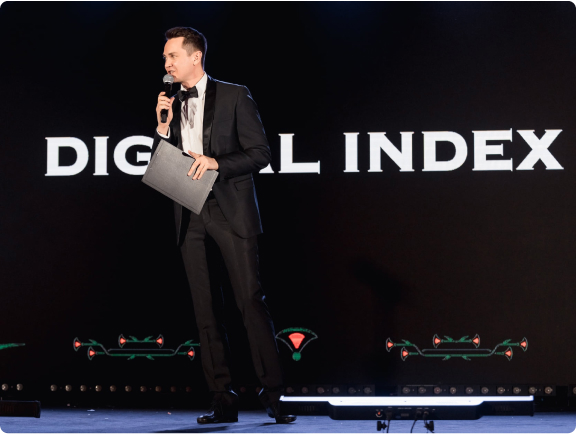
Ranked in the Top 3 of the Adindex Digital Index (Web Production segment)
Listed among the Top 100 Digital Integrators in Russia, holding the 11th position
System integrators ranking - 3rd place
Certificates are issued across four levels — A+, A, B, and C.
As part of the certification process, a comprehensive audit of each agency is conducted. This includes an on-site visit by сertification сenter staff, verification of original documentation, and interviews with employees. The audit evaluates a wide range of factors: service revenue history, the presence of qualified specialists on staff, confirmed references from major clients, overall team size, the number of completed projects/contracts over a given period, and the agency’s years in operation.
In addition to verifying formal indicators, сertification сenter experts identify and validate the agency’s most significant strengths.
RUWARD guarantees that every certified agency or production company undergoes a thorough and independent audit against all formal certification criteria.
Many companies require custom enhancements. Leading integrators stand out through their attention to operational details, ability to design and manage complex workflows and integrations, deep expertise and analytical approach, as well as specialized competencies in developing tailored solutions.
It was created to bring structure to the web development, digital marketing, and IT solutions market, while helping clients identify reliable service providers.
The integrator ranking highlights companies specializing in corporate solutions — such as CRM, ERP, and enterprise portals.
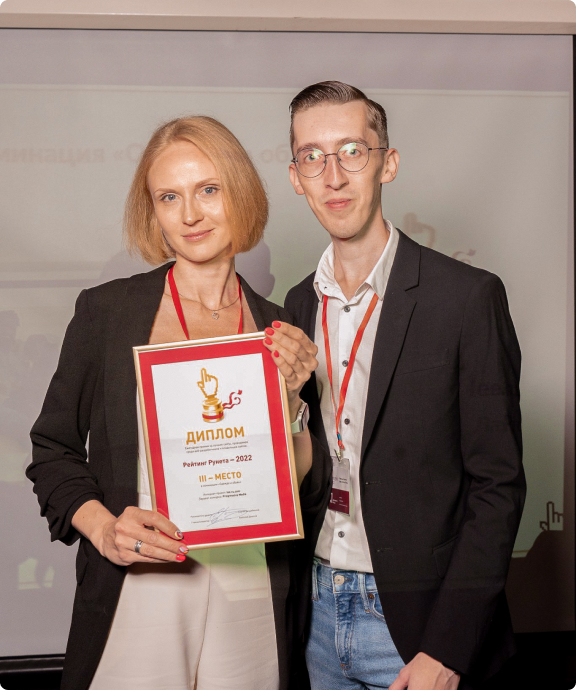
Participation and a strong position in the Runet Rating are recognized as a mark of professional excellence and serve as an additional guarantee of quality for potential clients.
The system is widely adopted across business, government, and education due to its scalability, security, and extensive functionality.
Being recognized as a Key Partner of 1C-Bitrix is not just a badge — it is a verified status granted only to the most experienced and reliable integrators.
Its members include leading IT companies, software developers, marketing agencies, telecom operators, vendors, and digital integrators.
Only companies with a proven reputation for reliability and expertise, a contribution to the advancement of digital technologies, and adherence to industry ethical standards are admitted to RAEC.
The association collaborates with government institutions, universities, research centers, and international organizations — offering members access to insights, expertise, and resources that are not available to the broader market.
In 2024, more than 1,250 experts from 550 companies participated in the voting. The ranking takes into account key factors such as brand awareness, market share, quality of service, and the expertise level of specialists.
It is designed for large-scale clients seeking comprehensive business automation or digital transformation, CRM implementation, intranet solutions or corporate portals, as well as the development of complex — including high-load — digital projects.
The CRM integrator ranking on the CRMindex is based on customer feedback, implementation cases, and additional criteria, making it a practical guide for companies choosing a contractor for a CRM project. A high ranking is perceived by the market as confirmation of the integrator's experience, the number of successful implementations, and the level of trust from the business.